
Aransas County IVSS Coverage
Texas replaced the former county Texas VINE service with Texas IVSS-Counties on September 1, 2025. Historic search results and saved instructions may still say VINE or VINELink. Those names help identify the old service, but current users should follow the live IVSS-Counties screens. Aransas County participation could not be proved from a stable public agency list because the portal is dynamic and includes a CAPTCHA. Confirm that Aransas County or its agency is selectable before relying on it.
County IVSS can carry events from participating local agencies, including booking, release, transfer, escape, death, movement to TDCJ, and some court changes. The exact fields depend on the source record. A transfer alert does not mean release to the community. If the person was committed to state prison, use the separate TDCJ IVSS portal for state custody and parole-related notifications.
The Texas Attorney General's notification page documents the statewide county-system transition.
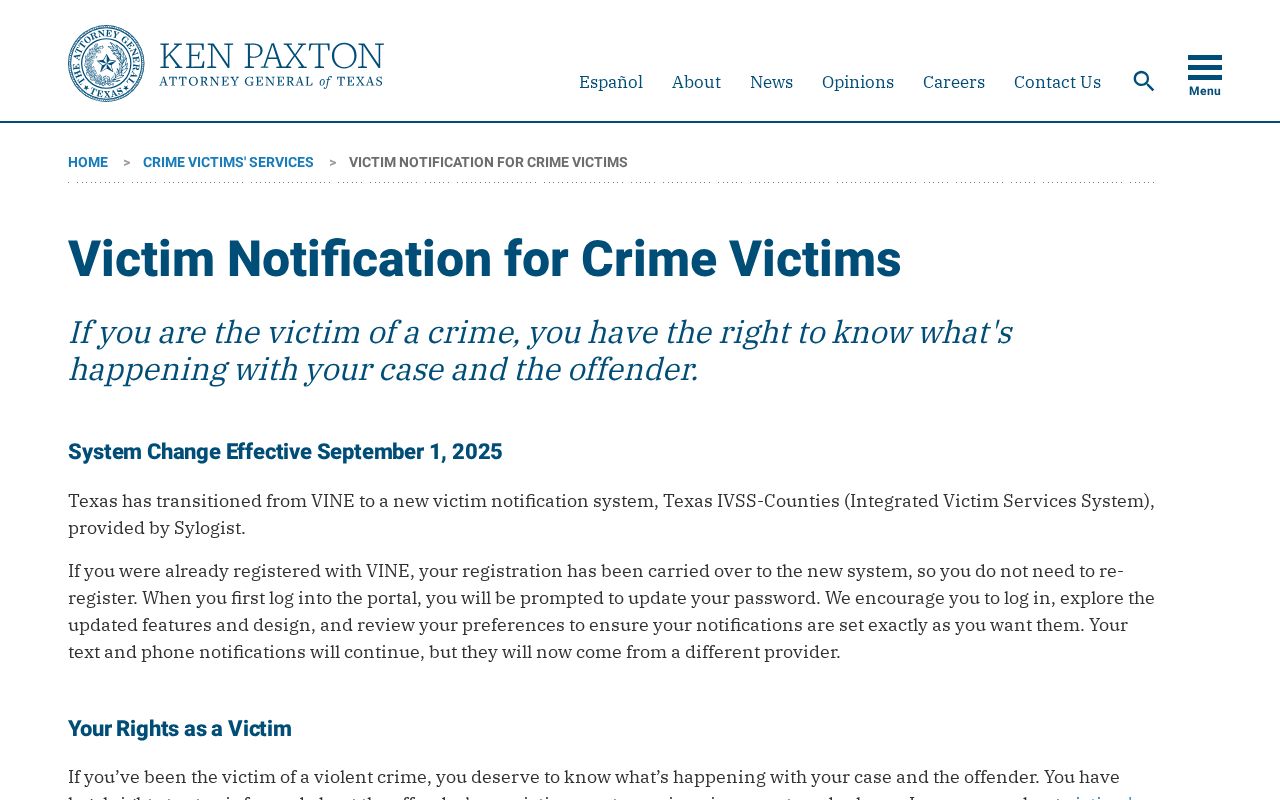
The transition is why old PIN instructions should not be imposed on a new registration.
Search Aransas County IVSS
Search one person at a time. Gather the full name and any reliable identifier before opening the portal. Similar names can produce a false match, and an absent result does not prove release. The agency may not participate, the record may be outside the system's scope, or the person may have moved to another custodian.
- Open Texas IVSS-Counties and confirm Aransas County or the relevant local agency appears in the live interface.
- Choose the offender or case search offered by the portal.
- Enter the supported name or identifier. Complete any live verification prompt.
- Compare identifiers and agency information before selecting a result.
- Read the latest event exactly as displayed, including whether it says release, transfer, or movement to TDCJ.
The current county search interface is shown below.
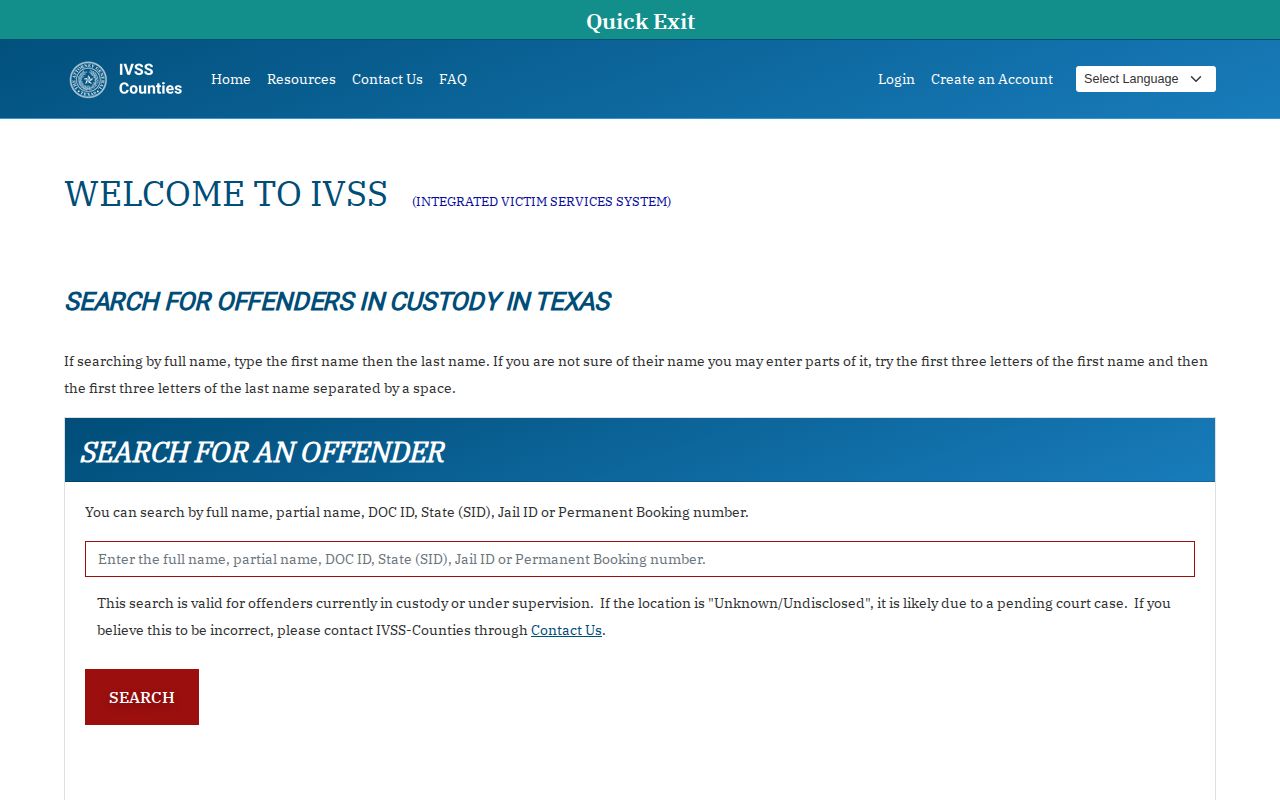
Use the live selector because county coverage can change and was not established from a static list.
Aransas IVSS Release Fields
IVSS fields vary by participating agency, so the live result controls. County custody events and state-prison results should not be blended. A county release event reports what the local source sent. A TDCJ projected date comes from the state corrections record and is not an actual jail exit.
| Displayed item | How to read it |
|---|---|
| Name or identifier | Match it to known facts before relying on the event. |
| Source agency | Shows which custodian supplied the information. |
| Custody event | May state booking, release, transfer, escape, death, or movement. |
| Event time | Marks when the reported event was recorded, subject to system lag. |
| Notification options | Shows the delivery methods currently offered for that record. |
| Location or destination | May direct verification to another agency; it does not always mean home. |
Describe a released result exactly as the portal displays it. If a transfer-to-TDCJ event appears, follow the person into the TDCJ system. If an event is missing or seems wrong, call the source agency. Alerts are corroboration, while the completed booking-out entry and operative release order are stronger local proof.
Register Aransas Release Alerts
Registration begins from the correct person or case result. Current offered delivery methods can include telephone, text, or email. Follow the portal's live confirmation steps and keep the destination current. System help is available at 866-268-8959.
- Open the matched record and choose its notification option.
- Select one of the delivery methods currently shown.
- Enter the telephone number, text number, or email address requested.
- Complete the verification or confirmation shown by the current portal.
- Save the registration details and update contact information when it changes.
Legacy Texas VINE materials used telephone registration, a four-digit PIN, and PIN plus the number sign to acknowledge calls. Unanswered calls could repeat. Those directions belong only to registrations before September 2025. Do not assume a PIN is now required unless the current screen asks for one.
Aransas VINELink Search Limits
County IVSS and TDCJ IVSS are notification systems, not certified release records. Data can lag. A person who no longer appears may be outside portal coverage or under another custodian. Confirm a disputed county event with the Aransas County Detention Center and request the jail-register or booking-out entry. The Aransas County released-inmate search path explains how court records and custody-specific sources fit together.
The TDCJ public inmate search covers people currently incarcerated in a TDCJ facility. It cannot serve as a historic result for someone who already left state custody. TDCJ incarceration history and Parole Division confirmation are better state-release routes. BOP's locator can show a federal "RELEASED" result and date after designation, while a federal pretrial detainee may belong first to USMS and the federal court. ICE uses its own locator for current and qualifying recent releases.
The DPS sex-offender registry is also separate. It covers only people subject to registration law. A registry entry does not prove an Aransas booking, and absence does not establish release. Use it only for its defined statutory purpose, never as a general inmate locator.
For a current state prisoner, the TDCJ Inmate Search can show location, offenses, and a Projected Release Date. A projected date is an estimate, not a notice that release occurred. After approval and a finalized plan, TDCJ may show a Scheduled Release Date and Scheduled Release Location, and those fields can change without notice. County IVSS should not be used to rewrite a projected state date as an actual Aransas County release.
A released former TDCJ prisoner may vanish from that current-only public search. TDCJ's email information route can provide incarceration history when supplied with enough identifying detail, and Parole Division records can support conditional release under supervision. Neither record proves that an earlier Aransas County booking ended in community release. Trace the county booking to its destination first, then use the state record only if the destination was TDCJ.
Aransas Federal Custody Alerts
The Detention Center's visitation policy separately categorizes county and federal detainees. It also requires USMS approval or attorney-of-record proof for federal attorneys. That local fact makes the word "released" especially risky. Leaving the Aransas County building can be a USMS move, delivery to BOP after sentence, federal court release, or actual community release.
The county alert system cannot settle which federal outcome occurred. For a federal pretrial detainee, use the signed federal release or detention order and confirm with the housing custodian or USMS. After BOP designation, use the BOP locator. An ICE detainer creates a different branch, and transfer into immigration custody is continued detention.
The official county visitation policy provides the local evidence for that federal detainee layer.
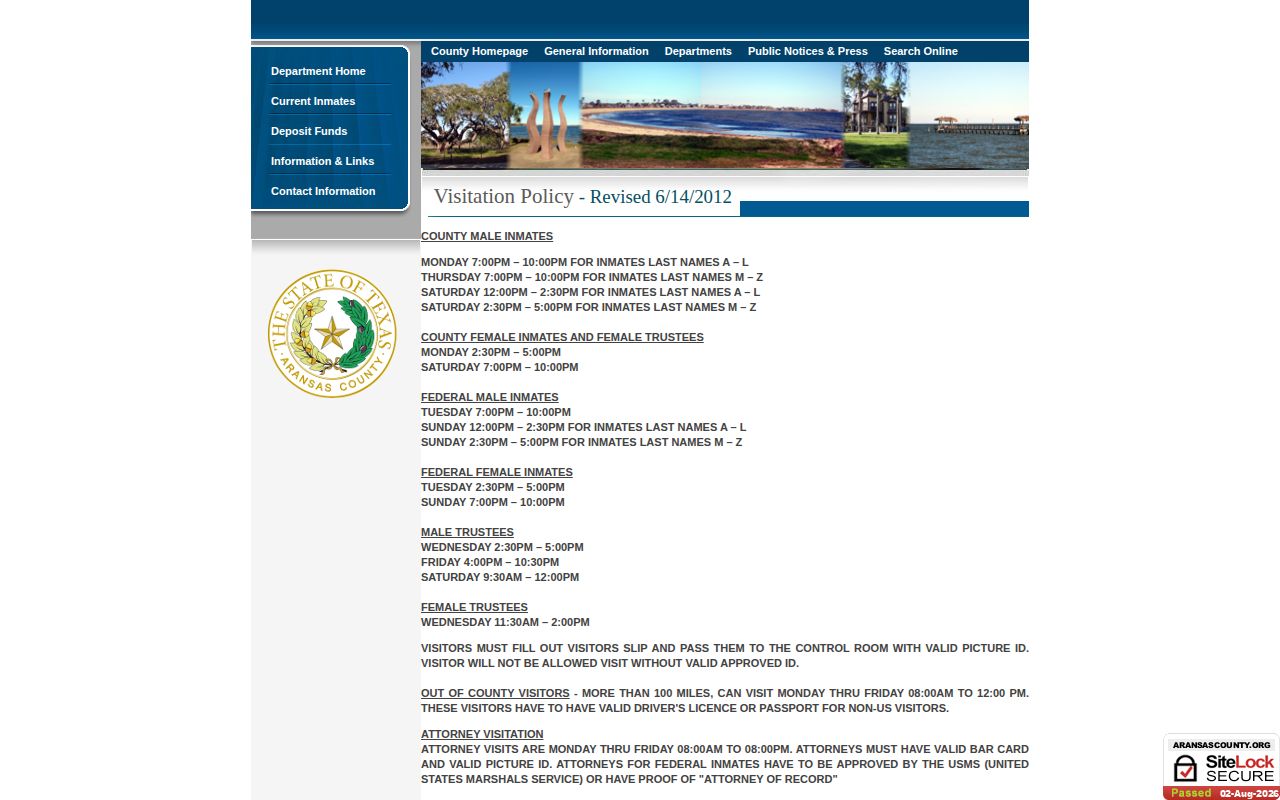
Its separate categories show why a county-building exit must be traced to the next custodian.
Confirm Aransas Release Events
Evidence strength matters. A sheriff's completed booking-out entry and the operative court order are the strongest pair for an Aransas County release. The order establishes legal authority. The jail entry establishes completion and may record destination. A county IVSS alert supports that result, but the portal warns that its data is not an official record.
- Release
- The source says custody ended, though any supervision or separate hold must still be checked.
- Transfer
- The person left one custodian and entered another; it is not community release.
- Discharge
- The relevant sentence or supervision term ended, as shown by the responsible agency.
- Parole
- Conditional release from prison while the person remains under state supervision.
Save the alert time and wording. Then contact the source shown on the result. For local events, call the Detention Center at 361-790-0168. Ask if processing is complete and whether a destination or receiving agency was recorded. For state events, compare TDCJ custody and parole records. This preserves what each system truly proves.
Keep the person's identifiers private when asking for help. Share only what the agency needs to locate the correct record. If the name yields several matches, stop and compare the source agency, booking details, and known dates before registering. An alert attached to the wrong record can create needless confusion and will not correct itself merely because the names resemble each other.